
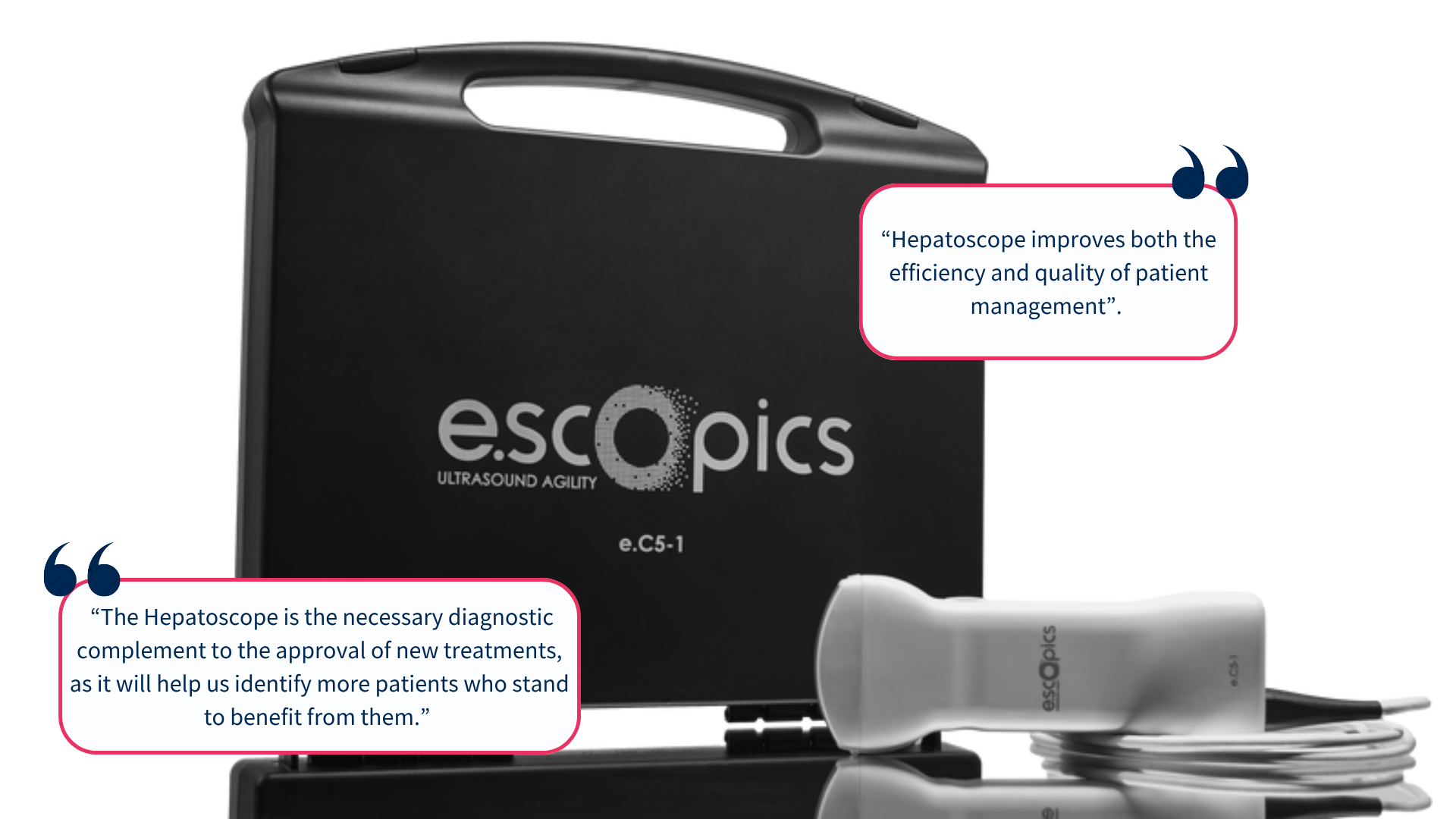

Your trusted partner for liver disease assessment
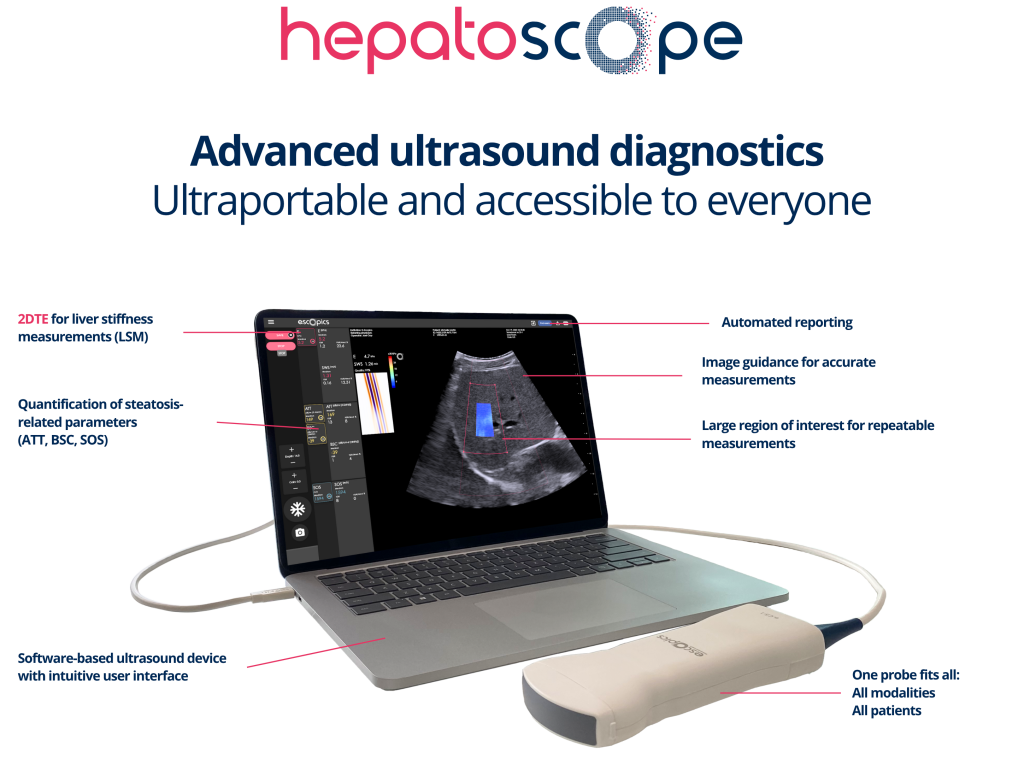
Hepatoscope is a breakthrough non-invasive point-of-care solution for early assessment of chronic liver disease.
Easy to use, ultraportable and accessible to any healthcare professional, it facilitates mass triage of patients at risk of developing liver steatosis and fibrosis.

Clinical Applications
Assessment performed with Hepatoscope can be used for diagnosis,
monitoring and management of patients with liver disease.
from Hepatologists to GI specialits, Endocrinologists and primary care physicians
2 modalities: 2DTE & QUS
2DTE
LSM under image guidance
50Hz-transient vibration elastography
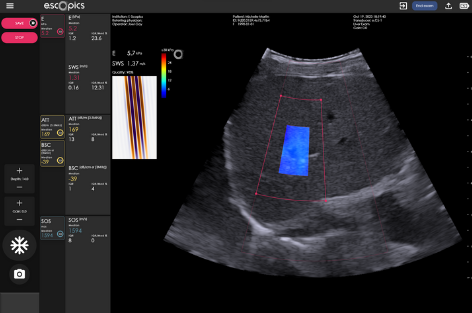
The most relevant measurement recommended by clinical practice guidelines to assess liver health
Quantitative Ultrasound
Measurements of liver brightness
3 parameters related to liver steatosis
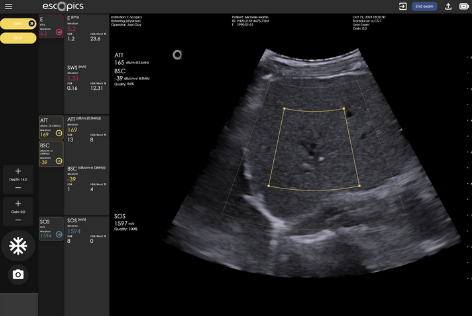
Reproducible and repeatable quantitative measurements performed in real time, under image guidance
Why choose

Full liver assessment in less than 4 minutes: Combines liver stiffness and steatosis-related parameters (2DTE+QUS) in one exam.

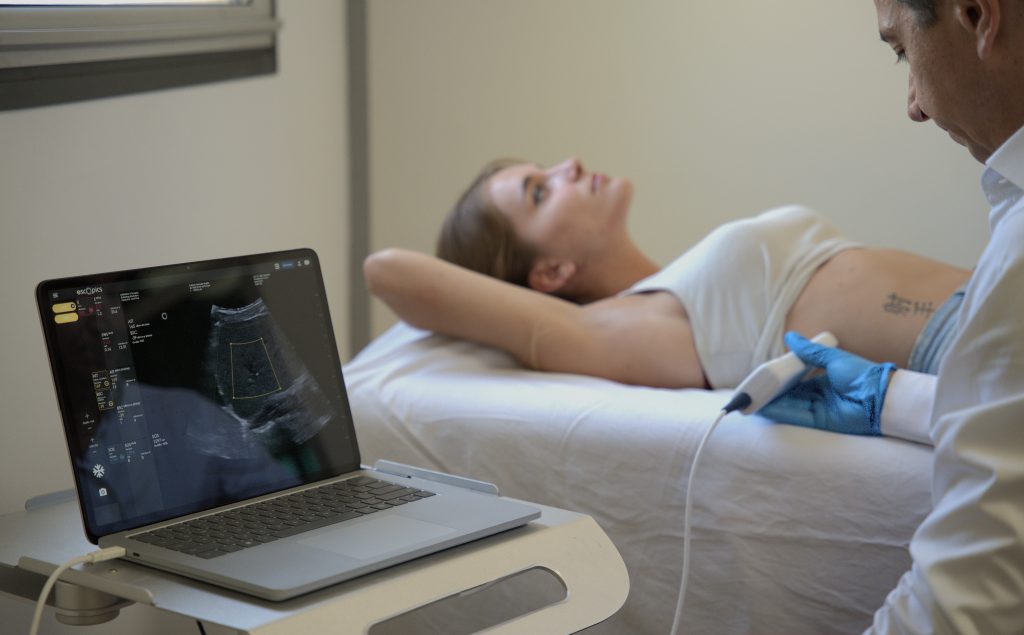
Ideal for private practices, hospitals, health systems or mobile screening centers, Hepatoscope enables liver assessment wherever care happens.

Image guidance builds confidence between operator and physician interpreting results and making clinical decisions.

Easy to adopt: Your team can be up and running in a single training session.

Designed to support high value screening programs. Predictable costs, no calibration required. Always up to date.

Operates on your own Microsoft computer or tablet
No large cart of capital equipment required
How
works
Earlier liver assessment should be simple and accessible, wherever care happens
Hepatoscope is cleared by the US. FDA and CE marked.
It has been clinically validated globally by healthcare teams.
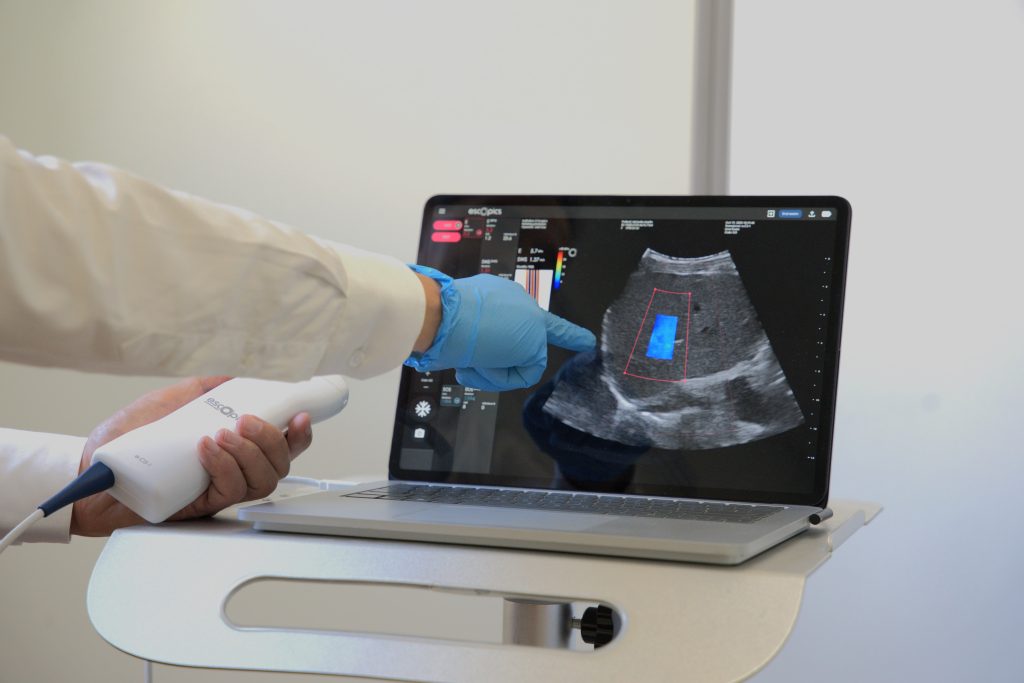
The advanced features of the Hepatoscope enable broad liver disease assessment across care settings: ultraportability, 50 Hz mechanical transient elastography, ultrafast imaging (real-time stiffness imaging), B-mode image.
- Improved accuracy (repeatability/reproducibility) and applicability
- Conventional ultrasound imaging to use as image guidance
- Usable by novice and expert operators
- Good-to-excellent repeatability and reproducibility of measurements
The large regions of interest ensure increased accuracy of results, critical for system-level quality control.
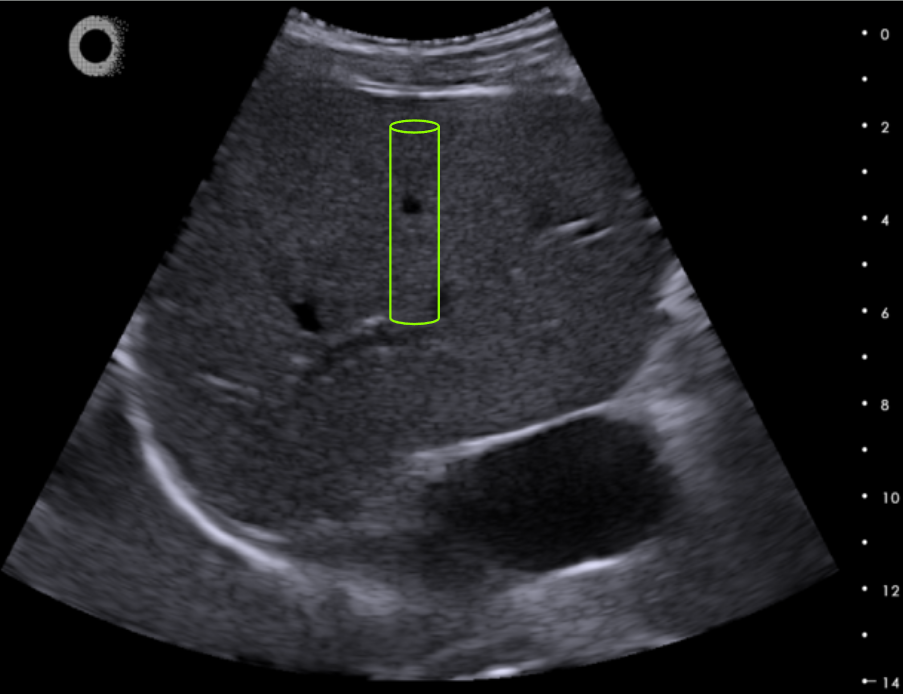
VCTE – Sample Volume = 3 mL
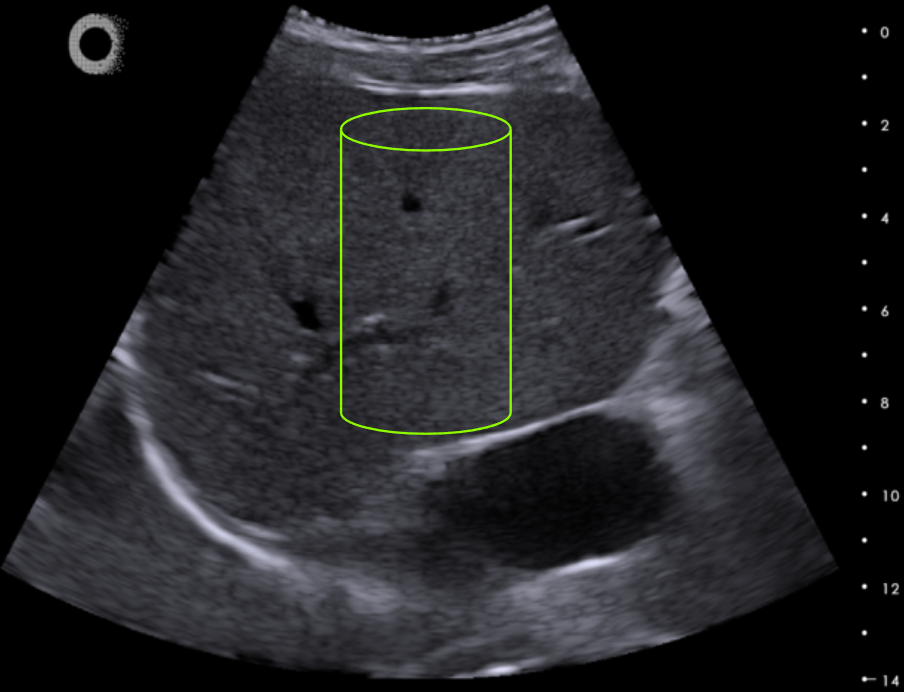
2DTE – Sample Volume = 65 mL
The 2DTE Technology
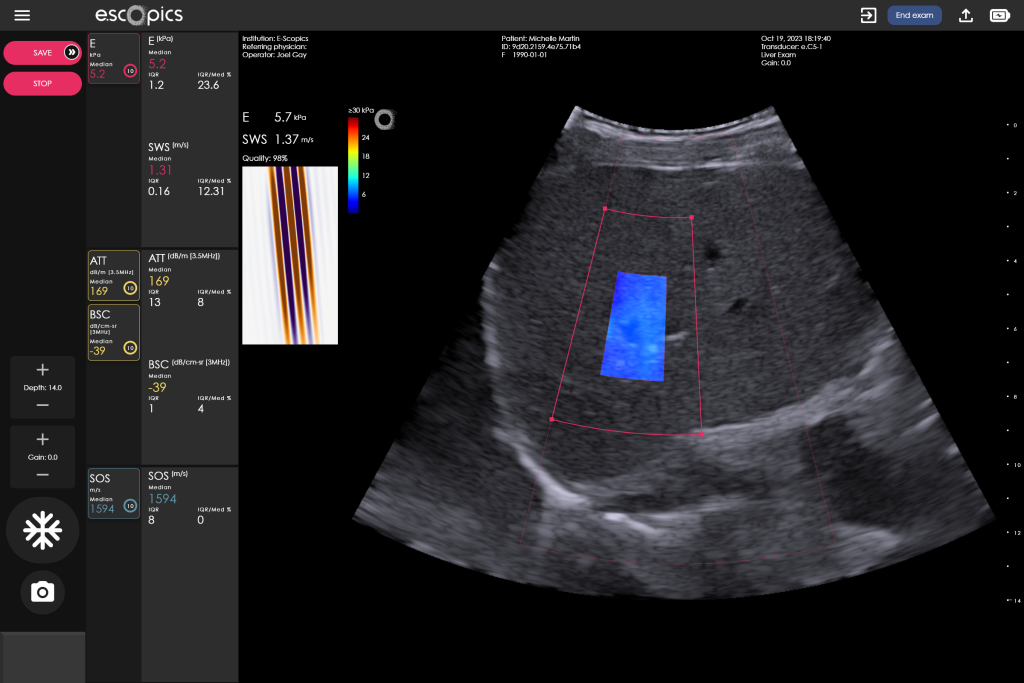
Hepatoscope 2DTE (two-dimensional transient elastography)is the most advanced ultrasound technology for liver stiffness measurements (LSM), integrating both transient elastography (Catheline, Wu, and Fink 1999) and ultrafast ultrasound (Tanter and Fink 2014) implemented in an ultraportable format.

The Q.US Technology
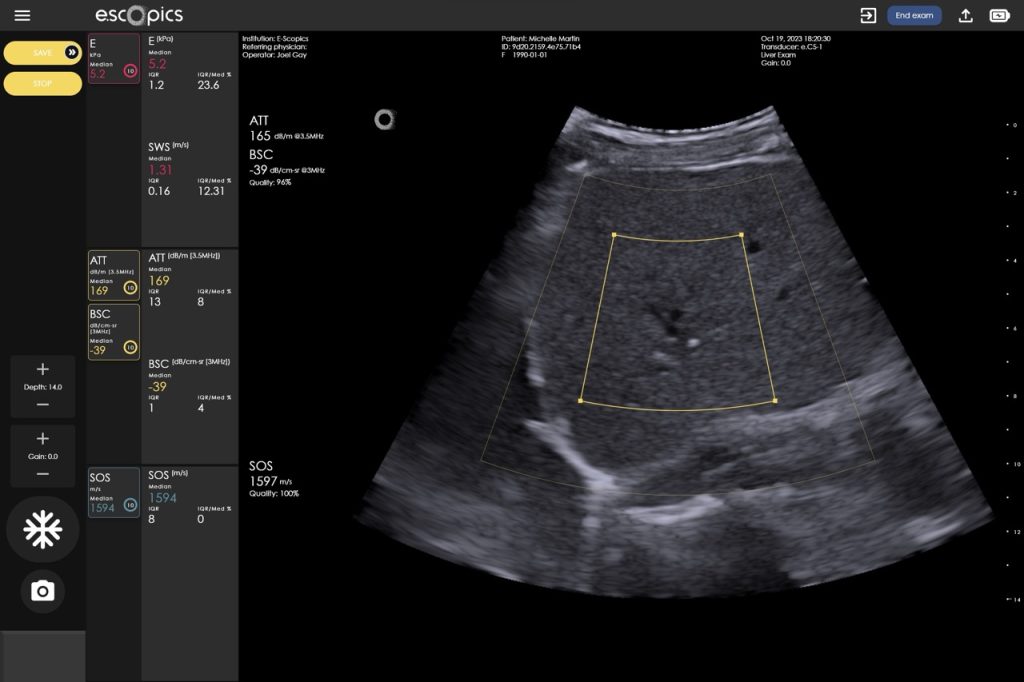
Quantifying steatosis in the liver is the first step in the diagnosis of MASLD and primarily uses non-invasive ultrasound. Initially visual (qualitative), the assessment of fat in the liver has benefited from the development of quantitative ultrasound (QUS) which now offers objective measurements of steatosis-related parameters, surpassing subjective visual assessments.

Early liver assessment should be simple and accessible, wherever care happens
Testimonials: Trusted by liver health clinicians and researchers
Assessment performed with Hepatoscope can be used for diagnosis,
monitoring and management of patients with liver disease.

Seamlessly integrates into routine care.
From specialist clinics to community screening and mobile outreach.