
Clinical context
Cirrhosis accounts for two millions deaths each year and is one of the leading causes of mortality worldwide. The most common cause of chronic liver diseases (CLD) is the metabolic-dysfunction associated steatotic liver disease (MASLD, formerly known as non-alcoholic fatty liver disease NAFLD Rinella et al. 2023, J of Hepatol).
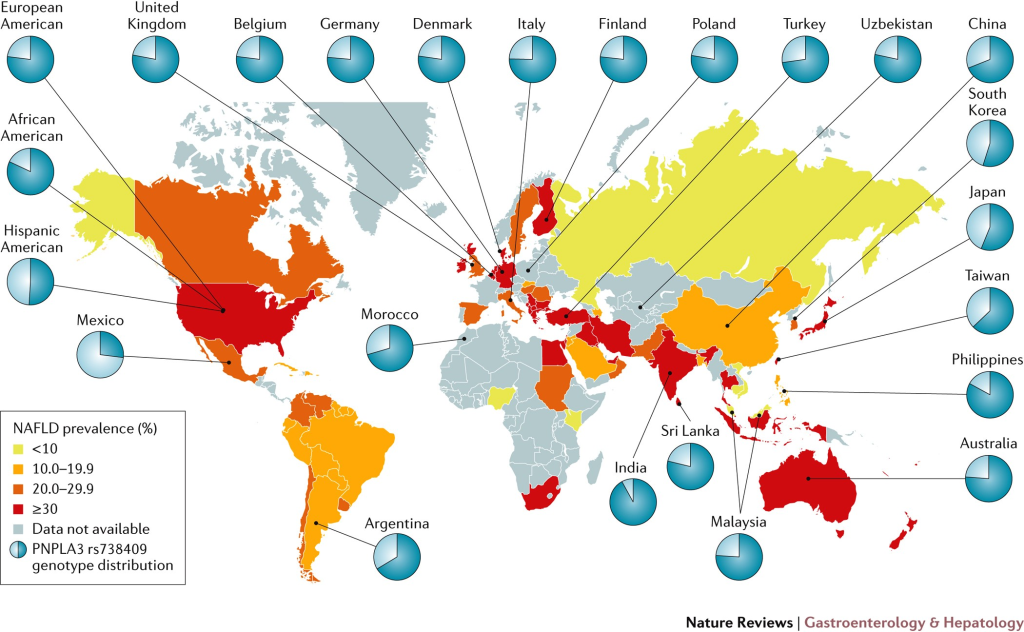
(Harshad Devarbhavi, j Hepatol 2023)
(Younossi et al. 2023 hepatology)
It raises a major concern as its global prevalence is 30% and is still increasing. MASLD and its most severe form, metabolic-dysfunction associated steatohepatitis (MASH or NASH before the nomenclature change) are primarily driven by the pandemic of obesity and Type 2 diabetes mellitus (T2DM) and lead to the development of liver fibrosis in 25% of patients.
These include people living with metabolic syndrome, defined as the presence of several cardiometabolic risk factors such as insulin resistance, obesity, high levels of triglycerides or low levels of HDL cholesterol and elevated blood pressure.
Hepatoscope is clinically Validated

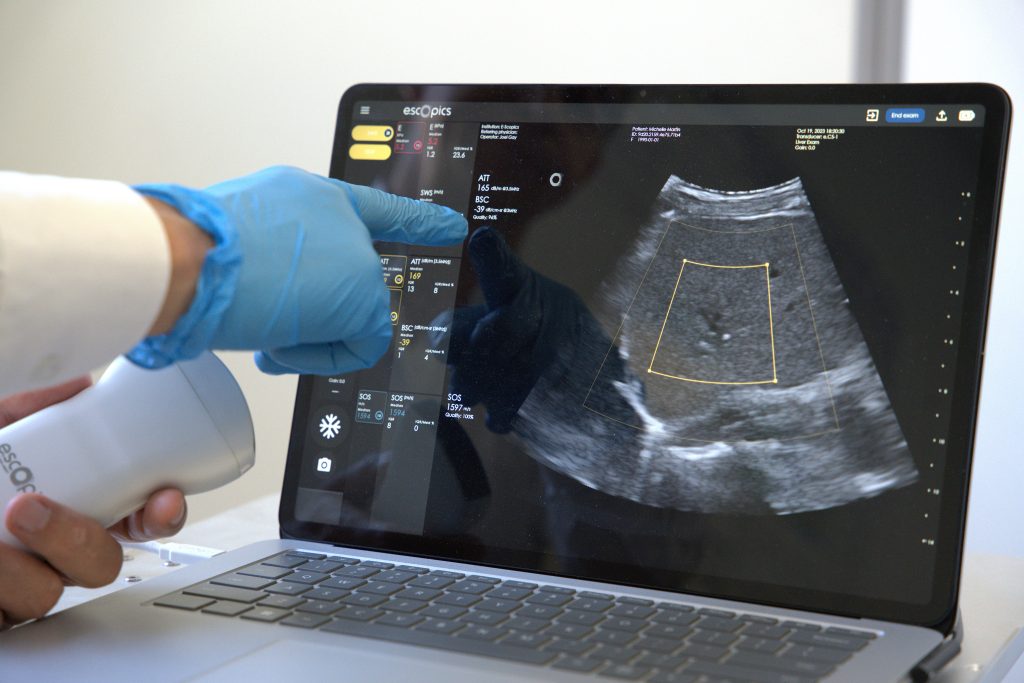
• The computation of a real time imaging-based internal quality index for each individual value improves the clinical applicability and repeatability for both expert and novice users / Improved reliability (DIACEPA)¹
• LSM by 2DTE strongly and significantly correlates with LSM by other transient elastography techniques.²
• Can be used in hepatology, gastroenterology, endocrinology, diabetology or community-care centers for non-invasive liver assessment in a broad range of patient populations.³
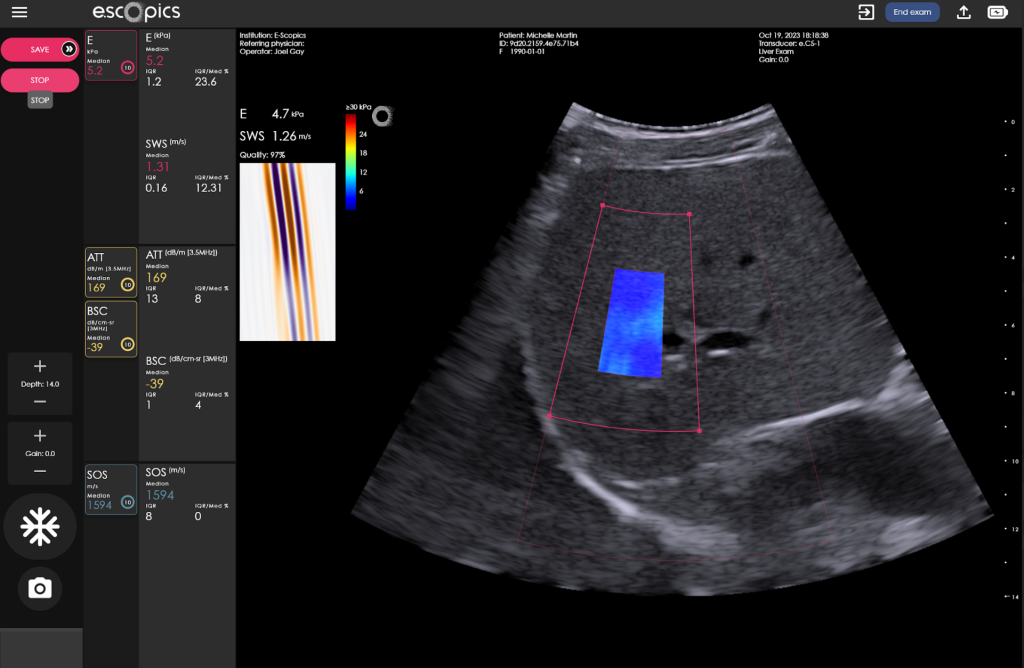
• The measurements with Hepatoscope are not affected by depth, and larger regions of interest show consistency improvements.
• Hepatoscope has good diagnostic performance to triage patients who need to be referred to a liver specialist and/or at risk for advanced fibrosis.
• Unbiased measurements of liver stiffness
• Hepatoscope can be used as a second-line non-invasive test after FIB-4
• Liver stiffness measurements are not affected by BMI
Using 50 Hz mechanical transient elastography, Hepatoscope is building on
25+ years of clinical use of similar technologies, and the extensive supporting clinical evidence.
Technological validation
Hepatoscope combines many features to ensure it fits the actual need for early screening of liver disease: ultraportability, 50 Hz transient vibration elastography, ultrafast imaging (real-time stiffness imaging), B-mode image. It has been designed for improved accuracy (repeatability/reproducibility) and applicability.
Leveraging B-mode imaging from conventional ultrasound, Hepatoscope can be used by both novice and expert operators, with good-to-excellent repeatability and reproducibility for liver stiffness and fat quantification.
Its enlarged region of interest is a key feature ensuring a better accuracy of measurements.
Recently, several medical societies, including hepatology, obesity, diabetology and gastroenterology societies, reached a consensus to promote early liver screening in populations at risk for advanced fibrosis.
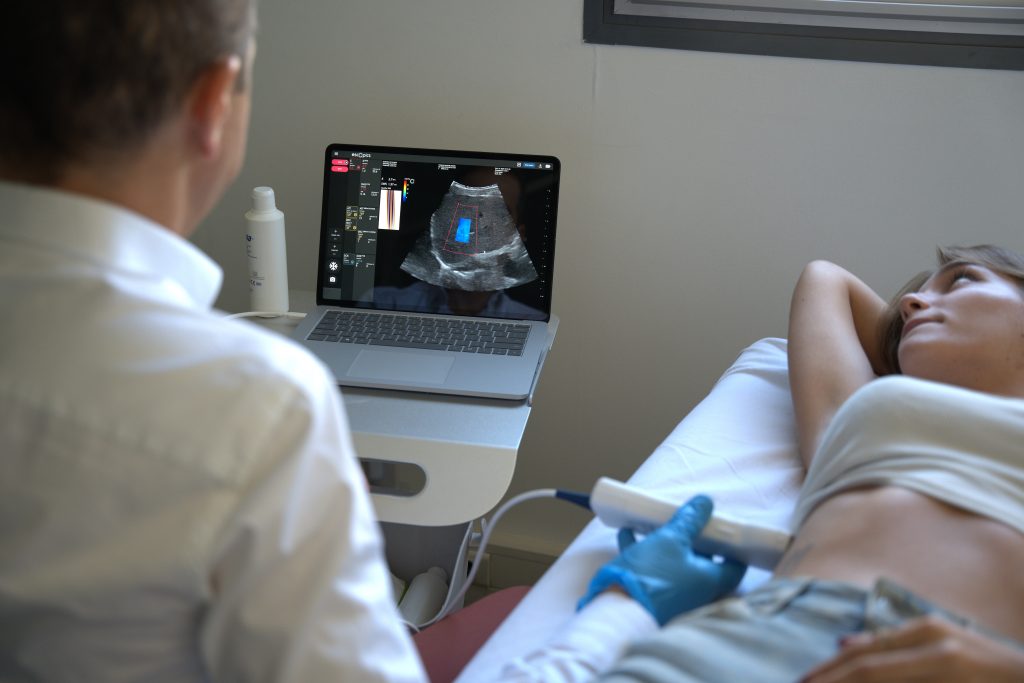
To ensure diagnosis is available to most of the population, availability of inexpensive/cost-effective non-invasive tools (NITs), ultraportable and easy to perform at point-of-care is required.
Among these NITs, there are medical devices using ultrasound (sonographs) and/or elastography (shear-wave, transient elastography) for the assessment of liver health. Specifically, these tools must provide quantitative “biomarkers” to allow physicians and patients to understand their liver health.
E-Scopics is a member of the PEDDLE (Patient Engagement in Drug Development: Leading through Example) group, from the Liver Forum. The PEDDLE group specifically works on improving the consideration of patient’s voice in drug and medical device development.